How to Reduce Sunroom Cooling Costs: An Architectural & Thermodynamic Guide
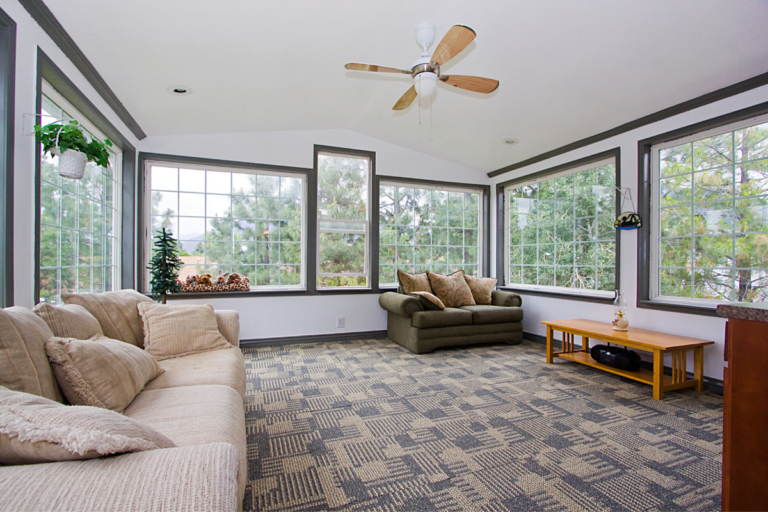
The modern sunroom exists as an architectural paradox. It is a structure designed to invite the external environment inward while simultaneously attempting to reject the most potent byproduct of that environment: thermal radiation. In the pursuit of panoramic views and natural luminosity, we often inadvertently create a highly efficient solar collector. When the radiant energy of the sun passes through standard glazing, it is absorbed by interior surfaces—floors, furniture, and walls—and re-emitted as long-wave infrared heat. This heat becomes trapped behind the glass, a phenomenon colloquially known as the greenhouse effect, which can elevate interior temperatures to levels that challenge even the most robust mechanical cooling systems.
Addressing the thermal volatility of these spaces requires more than a simple increase in air conditioning capacity. Brute-force cooling is not only economically inefficient but often fails to address the underlying comfort issues, such as radiant heat asymmetry, where the air temperature is cool but the occupant feels “baked” by the proximity to hot glass. To master the climate of a sunroom is to engage in a sophisticated negotiation with the laws of physics. It involves managing the Solar Heat Gain Coefficient (SHGC) of the glazing, optimizing convective air currents, and understanding the role of thermal mass in regulating diurnal temperature swings.
As energy costs continue to fluctuate and environmental standards for residential buildings tighten, the ability to maintain a sunroom’s habitability without excessive expenditure has become a primary concern for homeowners and architects alike. The strategies for mitigation range from passive architectural interventions to active mechanical controls. This inquiry serves as a definitive reference for those seeking to stabilize these delicate glass environments, providing a framework that prioritizes systemic efficiency over temporary fixes.
Understanding “how to reduce sunroom cooling costs”
In professional architectural circles, the query of how to reduce sunroom cooling costs is interpreted as a demand for a systemic audit of energy flows. A common misunderstanding among property owners is the belief that cooling is solely a matter of air temperature. In reality, the sensation of “heat” in a sunroom is primarily a radiant phenomenon. If the glass surfaces are allowed to reach high temperatures, they will radiate heat directly onto the skin, regardless of what the thermostat reads. Therefore, the “best” cooling strategy often involves preventing that heat from ever entering the building envelope.
Oversimplification in this field usually leads to “chasing the load.” A homeowner might install a powerful mini-split system only to find their electricity bills skyrocketing. This occurs because the cooling system is fighting against “continuous gain”—the sun is adding heat faster than the air conditioner can remove it. To reduce costs effectively, one must look at the “Envelope First” approach. This involves evaluating the orientation of the structure, the emissivity of the glass coatings, and the integrity of the thermal breaks in the framing.
Furthermore, there is the risk of ignoring the “Second-Order Effects” of cooling. For instance, using heavy internal blinds to block the sun might reduce air temperature, but if those blinds are dark in color, they absorb heat and radiate it into the room, effectively becoming heaters themselves. A truly robust management plan accounts for the difference between blocking light and reflecting energy, focusing on high-albedo materials and exterior-grade interventions.
The Contextual Evolution of Solar Management
The historical lineage of the sunroom reveals a shift from botanical survival to human luxury. The 18th-century Orangerie was built of heavy stone to retain heat for citrus trees. Cooling was achieved simply by opening massive doors. As we transitioned into the Victorian era, the Conservatory introduced the “shading blind”—often made of woven wood or canvas—placed on the exterior of the glass. The Victorians understood a fundamental truth that modern homeowners often forget: once the heat passes through the glass, the battle is largely lost.
The mid-20th century introduced the “Three-Season Room,” which often lacked any cooling at all, serving only as a shaded porch. It wasn’t until the 1980s and the development of Low-Emissivity (Low-E) coatings that the year-round sunroom became a mass-market reality. These microscopic metallic layers allowed glass to become “selective,” letting in visible light while reflecting the infrared spectrum.
Today, we are in the era of “Dynamic Glazing” and “Passive House” standards. We no longer view cooling as a mechanical burden but as a design variable. The historical trajectory has moved from ventilation to shielding to selective transmission. Understanding this evolution is crucial for identifying which modern technologies are truly innovative and which are merely high-tech versions of Victorian canvas.
Conceptual Frameworks: The Physics of Radiant Heat
To effectively reduce expenditure, one must utilize mental models rooted in thermodynamics.
The Solar Heat Gain Coefficient (SHGC) Logic
This is the primary metric for cooling. SHGC measures the fraction of solar radiation admitted through a window. An SHGC of 0.30 means 30% of the sun’s heat enters the room. In sunroom design, the goal is to drive this number as low as possible without sacrificing “Visible Light Transmittance” (VLT).
The Stack Effect and Natural Aspiration
This model utilizes the buoyancy of hot air. Hot air is less dense and rises. By placing operable vents or windows at the highest point of the sunroom (the apex) and intake vents at the lowest point, you can create a natural “thermal chimney” that flushes heat out without using a single watt of electricity.
The Thermal Bridge Framework
This framework treats the framing of the sunroom as a conductor. In an aluminum-framed room without “thermal breaks,” the metal itself becomes a heat-sync, conducting the exterior warmth directly into the interior. Cooling costs cannot be reduced if the walls themselves are acting as radiators.
Key Categories of Cooling Mitigation
Mitigation strategies are divided into passive interventions (envelope-based) and active systems (mechanically based).
-
High-Performance Spectrally Selective Glazing: Using double or triple-pane glass with multiple Low-E coatings.
-
Exterior Shading Systems: Awnings, exterior roller shades, or “overhangs” that prevent the sun from hitting the glass during peak intensity (10 AM to 4 PM).
-
Internal Reflective Treatments: Cellular shades with a silver or white backing designed to reflect light back out through the glass.
-
Ventilation Management: Utilizing variable-speed ceiling fans or integrated Heat Recovery Ventilators (HRVs) to move air.
-
Thermal Mass Integration: Using stone or tile flooring to “soak up” daytime heat and release it slowly at night, flattening the temperature peak.
-
HVAC Zoning (Mini-Splits): Using dedicated, high-efficiency heat pumps rather than extending the home’s main ductwork into a glass-heavy zone.
Comparison of Cooling Strategies
| Strategy | Efficiency Gain | Upfront Cost | Maintenance |
| Exterior Awnings | Very High | Moderate | Moderate |
| Low-E 366 Glazing | High | High | Low |
| Ceiling Fans | Low (Perceived) | Low | Low |
| Mini-Split HVAC | High | High | Moderate |
| Window Film (Aftermarket) | Moderate | Low | Moderate |
Detailed Real-World Scenarios and Site Constraints
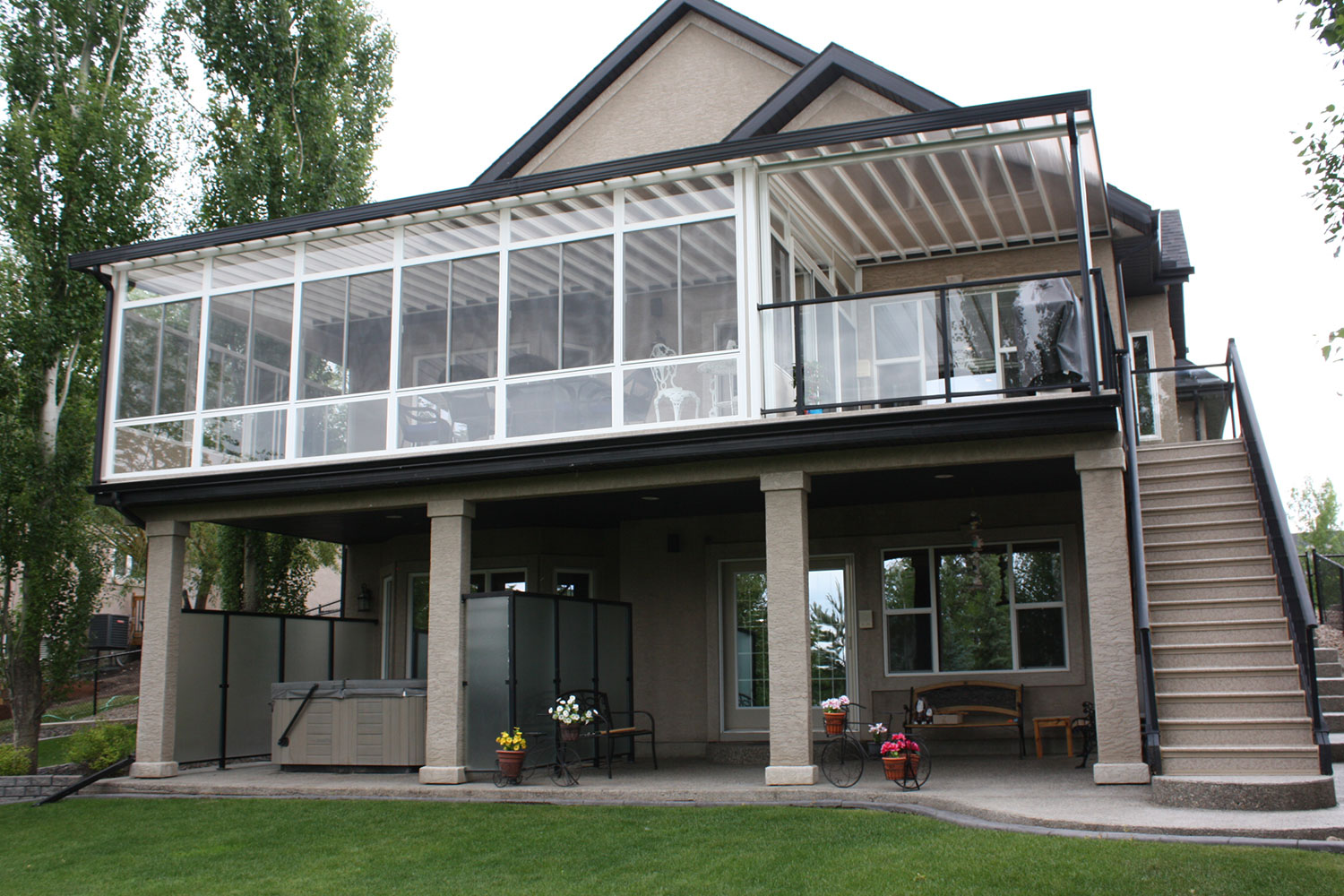
Scenario A: The West-Facing “Hot Box”
A sunroom with western exposure receives the full brunt of the sun during the hottest part of the day.
-
The Constraint: Standard AC cannot keep up with the 4 PM solar spike.
-
The Solution: A combination of an exterior retractable solar screen and a low-SHGC glass upgrade.
-
Failure Mode: Relying on interior curtains, which trap the heat against the glass and radiate it into the room via convection.
Scenario B: The High-Ceiling Solarium
-
The Constraint: Cooling the entire volume of air is prohibitively expensive.
-
The Decision Point: Utilize “Stratified Cooling.” By installing a ceiling fan in reverse and cooling only the bottom six feet of the room with a floor-mounted mini-split, the upper hot air is allowed to stay hot and undisturbed at the ceiling.
Planning, Cost, and Resource Dynamics
The economics of cooling are often non-linear. A 10% improvement in glass performance might lead to a 30% reduction in peak cooling load, allowing for a smaller, cheaper AC unit to be installed.
Estimated Investment and Payback Tiers
| Intervention | Estimated Cost | Estimated ROI (Energy) | Lifecycle |
| Passive Ventilation | $200 – $600 | 5 – 7 Years | 20 Years |
| External Shades | $1,500 – $4,000 | 4 – 6 Years | 10 – 15 Years |
| Glass Replacement | $5,000 – $12,000 | 10 – 15 Years | 30 Years |
| High-SEER Mini-Split | $3,500 – $6,000 | 6 – 8 Years | 15 Years |
Opportunity Cost: Choosing “clear” glass to save $2,000 on construction usually results in a room that is unusable for 90 days a year. The “cost of non-use” is the highest hidden expense in sunroom ownership.
Tools, Strategies, and Technical Support Systems
Precision in cooling requires moving past guesswork toward measurement.
-
Solar Pathfinders: Used to map the exact shade provided by nearby trees or buildings across all four seasons.
-
IR Thermometers: Essential for identifying “hot spots” in the frame or specific glass panes that are underperforming.
-
Energy Star Ratings: Specifically looking for the “Climate Zone” rating. A sunroom in Florida requires a vastly different U-factor and SHGC than one in Maine.
-
Smart Glass (Electrochromic): A strategy where the glass tints automatically based on the intensity of the sun.
-
Landscape Shading: The strategic planting of deciduous trees (leaves block summer sun, bare branches allow winter warmth).
-
Radiant Barriers: Installed in the solid portions of the sunroom roof to reflect 97% of radiant heat back out.
Risk Landscape: Failure Modes and Compounding Costs
The “Risk Landscape” of sunroom cooling is defined by the unforgiving nature of solar energy.
-
Thermal Stress Cracking: If you apply an aftermarket window film to certain types of double-pane glass, it can trap too much heat between the panes, causing the glass to expand and shatter.
-
HVAC “Short-Cycling”: Installing an oversized AC unit to handle the heat will cause the unit to turn on and off too quickly, failing to remove humidity and wearing out the compressor prematurely.
-
Condensation Reversal: In high-humidity coastal areas, over-cooling the interior glass can cause condensation to form on the outside of the window, potentially leading to frame rot.
-
Seal Failure: Intense heat buildup between the glass and an interior blind can degrade the desiccant and seals of the IGU (Insulated Glass Unit), leading to permanent fogging.
Governance, Maintenance, and Long-Term Adaptation
Reducing cooling costs is a long-term discipline, not a one-time event.
-
The Seasonal Shading Cycle: A “governance” rule where exterior shades are deployed on May 1st and retracted on October 1st.
-
Filter Cadence: Sunroom mini-splits often work harder than house units; filters should be cleaned every 30 days during summer.
-
Sealant Audit: Every spring, inspect the “weatherstripping” on operable windows. A tiny air leak allows the “cool” air you paid for to escape.
Adaptation Checklist
-
[ ] Clear all debris from “weep holes” in window tracks (allows heat-related moisture to drain).
-
[ ] Verify the “reversing valve” on the heat pump is functioning efficiently.
-
[ ] Check for “outgassing” signs on window films (bubbles or purple tint).
Measurement, Tracking, and Evaluation
How do you evaluate if your strategy to how to reduce sunroom cooling costs is actually working?
Quantitative Signals (Leading)
-
The SHGC Verification: Using a solar meter to verify that the glass is actually rejecting the percentage of heat the manufacturer claimed.
-
Watt-Hour Tracking: Using a dedicated smart-plug on the sunroom’s AC unit to track exactly how many kilowatt-hours are used per month.
Qualitative Signals (Lagging)
-
The “Barefoot” Test: On a 90-degree day, can you walk on the floor without it feeling uncomfortably hot?
-
Recovery Time: After the sun goes down, how quickly does the room return to a comfortable temperature without mechanical help?
Common Misconceptions and Oversimplifications
-
Myth: “Darker tints cool better.”
-
Correction: Dark tints often absorb heat and radiate it inward. Clear Low-E 366 coatings are far more effective at rejecting heat while keeping the room bright.
-
-
Myth: “Tinting the inside of the glass is the best way to save.”
-
Correction: Exterior shading is up to 7 times more effective because the heat never touches the glass.
-
-
Myth: “Turning the AC down to 60 will cool the room faster.”
-
Correction: AC units only have one “speed” of cooling; they just run longer to reach lower temperatures. It doesn’t cool “faster,” it just wastes energy.
-
-
Myth: “All double-pane glass is the same.”
-
Correction: The difference between “Contractor Grade” and “High Performance” glass can be a 400% difference in heat rejection.
-
Conclusion: The Synthesis of Shade and Science
The quest to how to reduce sunroom cooling costs is ultimately a journey from “fighting nature” to “working with physics.” A sunroom shouldn’t be a high-maintenance burden that drains the home’s energy budget. By shifting the focus from mechanical cooling to architectural shielding—prioritizing exterior shades, spectrally selective glass, and natural ventilation—we can transform these spaces back into what they were meant to be: sanctuaries of light.
The most successful cooling plans are those that are invisible. They exist in the microscopic layers of the glass and the strategic placement of a tree. When we build with thermal honesty, we create spaces that remain comfortable not through the brute force of electricity, but through the intelligence of design.